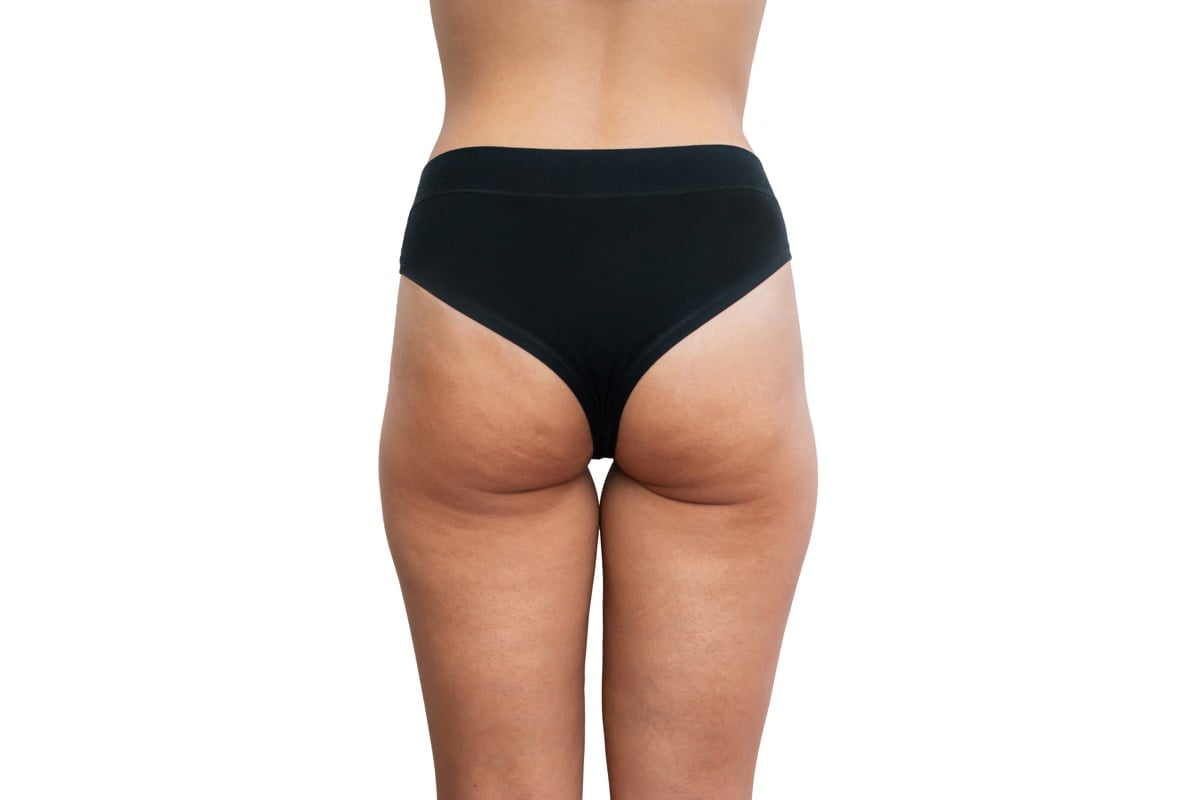
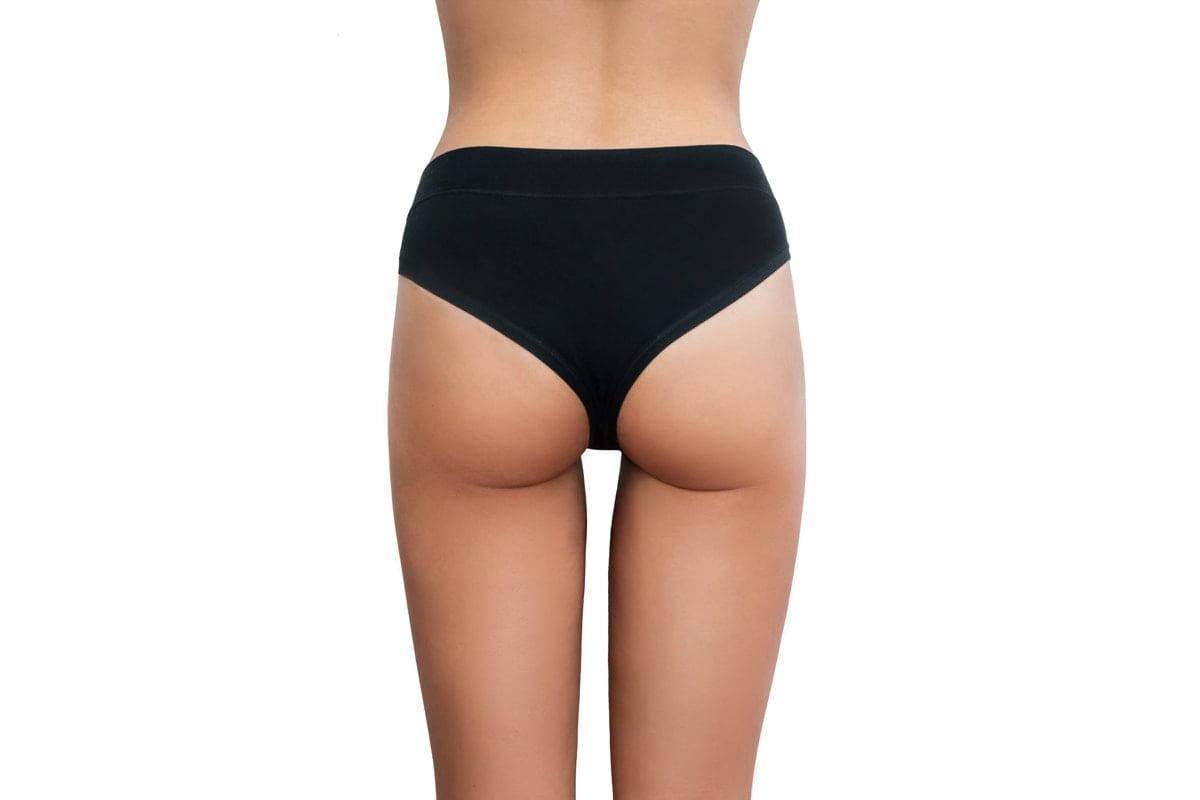
BBL (Brazilian Butt Lift) is a body contouring procedure in which fat is removed from suitable areas of the body through liposuction, processed, and transferred to the buttock area.
In gluteal contouring, fat injection is not simply about creating volume; injection planning and patient safety are fundamental aspects of the procedure.
In Dr. Atilla Fesli’s approach, fat is injected only into the subcutaneous plane—the fatty tissue above the muscle. Fat is not injected into the gluteal muscle.
When assessing whether a patient is suitable for BBL, the available donor fat, skin quality, existing body proportions, desired buttock shape, and the extent of the accompanying liposuction are evaluated together.
A significant increase in volume may not be anatomically appropriate or safely achievable in every patient. Safe surgical limits always take priority over the desired volume.

The goal of BBL is not simply to make the buttocks as large as possible.
The proportions of the waist, back, buttocks, and surrounding areas are evaluated together with the aim of creating a more balanced silhouette.
While liposuction is used to contour the surrounding areas, the patient’s own fat can be transferred to selected areas to improve buttock projection, transitions, or areas of volume deficiency.
For this reason, BBL is better considered a body proportioning and contouring procedure in suitable patients rather than simply a “buttock enlargement” operation.
For BBL, there must first be a sufficient amount of suitable fat available for transfer.
Patients with adequate fat deposits in areas such as the abdomen, waist, back, thighs, or other suitable donor areas may be evaluated.
General health should also be suitable for surgery and anesthesia, body weight should be relatively stable, and the patient should have realistic expectations.
Skin quality, existing buttock anatomy, and the degree of change the patient wishes to achieve are also part of the assessment.
Not every patient is suitable for BBL.
In very lean patients with insufficient donor fat, the desired volume may not be achievable through fat transfer.
For some patients with significant excess weight, weight management may be recommended before considering surgery.
The surgical plan should also be reconsidered in patients whose general health increases operative risk, who have a high risk of blood clots, or who may not be suitable for extensive liposuction.
If a patient requests a volume that exceeds what their anatomy and safe surgical limits allow, expectations may need to be adjusted or surgery may not be recommended.
A BBL consultation is not limited to the question, “How much fat can be injected into the buttocks?”
The waist-to-hip ratio, existing buttock shape and projection, right-to-left asymmetries, skin quality, and available donor areas are evaluated together.
The overall extent of the planned liposuction is also important.
This is because the result of BBL is not determined solely by the volume added to the buttocks. Contouring the waist and surrounding tissues can also significantly influence how the buttocks appear in relation to the rest of the body.
During fat transfer, fat tissue obtained through liposuction is appropriately processed and transferred in a controlled manner to selected areas.
In Dr. Atilla Fesli’s approach, fat injection during BBL is limited to the subcutaneous tissue. Fat is not injected into the muscle.
The anatomical plane of injection is important, but so are the distribution of the transferred fat and the overall body proportions being created.
The objective is not to inject the maximum possible amount of fat into a single area, but to create a balanced contour within the limits permitted by the patient’s anatomy and surgical safety.
BBL is an aesthetic surgical procedure in which safety protocols are particularly important.
Large blood vessels are present within the deeper anatomical structures of the buttock region. Fat entering an inappropriate anatomical plane can therefore lead to serious complications.
For this reason, avoiding intramuscular fat injection and keeping fat transfer within the subcutaneous plane are among the fundamental principles of a safety-focused approach.
BBL planning should also consider more than the injection technique itself. The extent of simultaneous liposuction, duration of surgery, fluid balance, blood loss, and the patient’s individual risk of thrombosis must also be assessed.
When appropriate surgical systems are available, real-time ultrasound imaging can help visualize the position of the cannula tip within the anatomical tissue planes during fat injection.
This technology can provide the surgeon with additional information about the tissue plane in which the injection is being performed.
However, the use of ultrasound does not replace the other principles of safe surgery.
Appropriate patient selection, detailed anatomical knowledge, subcutaneous fat injection, surgical technique, and the overall safety plan remain important together.
There is no standard amount of fat that is appropriate for every patient.
The amount that can be transferred depends on the patient’s donor fat reserves, the characteristics of the existing subcutaneous tissue in the buttock area, skin capacity, desired contour, and safe surgical limits.
For this reason, it would not be appropriate to guarantee a specific number of litres or cubic centimetres before surgery.
The desired volume should never exceed what can be achieved within a safe anatomical plane and an appropriate surgical plan.
No.
Some of the transferred fat cells establish a new blood supply and survive in their new location, while some may be absorbed by the body during the healing process.
Many individual factors influence how much transferred fat ultimately survives. Therefore, it is not possible to guarantee that all transferred fat will remain or to promise a specific survival percentage.
Swelling during the first few weeks can also make the buttocks appear larger than their eventual volume.
The early postoperative appearance should therefore not be considered the final result.
BBL and more extensive fat transfer procedures are generally performed under general anesthesia in an appropriately equipped operating room.
The duration of surgery depends on the number of areas undergoing liposuction and the extent of the fat transfer.
When liposuction is performed over larger areas, factors such as fluid management, blood loss, body temperature, duration of surgery, and blood clot risk become increasingly important.
For patient safety, the extent of surgery may be limited when necessary.
Following BBL, swelling, bruising, and tenderness may occur both in the areas where fat was removed and in the buttocks where fat was transferred.
Compression garments may be recommended for some patients in the liposuction areas.
To help protect the transferred fat during the healing process, patients may receive individualized instructions regarding sitting, sleeping positions, and direct pressure on the buttocks.
The duration and details of these restrictions depend on the surgical plan and individual recovery.
Return to daily activities, work, and exercise should be gradual.
BBL is not completely scarless.
Small incisions are required for the liposuction and fat-injection cannulas. Whenever possible, these are positioned within natural folds or less visible areas.
The visibility of these scars depends on the individual’s healing characteristics.
Temporary numbness, tenderness, or altered sensations may also occur in areas treated with liposuction or fat transfer.
BBL carries surgical risks, and some potential complications can be serious.
Possible complications include bleeding, hematoma, infection, fluid accumulation, prolonged swelling, asymmetry, contour irregularities, fat necrosis, and greater-than-expected resorption of transferred fat.
Skin irregularities or unwanted contour changes may also occur in the areas treated with liposuction.
Blood clot-related complications, including deep vein thrombosis (DVT) and pulmonary embolism (PE), are also among the potential surgical risks.
One particularly important complication associated with BBL is pulmonary fat embolism. Fat entering deeper tissues and vascular structures can result in life-threatening complications. For this reason, limiting fat injection to the subcutaneous tissue is a fundamental part of the safety approach.
Surgical risk cannot be completely eliminated, and individual risk factors should be carefully assessed before surgery.
The human body is naturally not perfectly symmetrical.
Pelvic structure, gluteal muscles, fat distribution, spinal alignment, and natural differences between the right and left sides of the body can all influence the appearance of the buttocks.
BBL may reduce existing asymmetries, but mathematically perfect symmetry cannot be guaranteed.
Likewise, not every body type can be transformed into the same buttock shape.
The objective is not to reproduce a standardized shape seen on social media, but to create more balanced body proportions within the patient’s own anatomy.
Yes.
Transferred fat cells that successfully establish themselves in the new area behave like other fat cells in the body and can be affected by changes in body weight.
Significant weight gain may cause these fat cells to increase in size, while significant weight loss may reduce the achieved volume.
Remaining fat cells in the liposuction areas are also affected by weight fluctuations.
Maintaining a relatively stable weight is therefore important for supporting the long-term result.
During the initial follow-up appointments, the liposuction areas, swelling of the buttocks, skin and soft tissues, and overall healing are evaluated.
The use of compression garments, sitting and sleeping positions, walking, and physical activity are adjusted according to the individual patient and recovery process.
The volume seen during the first few weeks does not represent the final result.
As swelling decreases and the transferred fat changes during the healing process, the volume and contour of the buttocks may also change.
Adequate healing time should therefore be allowed before the final result is assessed.
What is a BBL?
BBL is a procedure in which the patient’s own fat is removed from suitable areas of the body through liposuction, processed, and transferred to selected areas of the buttocks.
Is BBL only performed to make the buttocks larger?
No. In some patients, the goal is not a significant increase in volume but rather to improve the waist-to-hip ratio, transitions between anatomical areas, and overall body contour.
Is fat injected into the muscle during BBL?
In Dr. Atilla Fesli’s approach, no. Fat transfer is limited to the subcutaneous plane—the fatty tissue above the muscle. Fat is not injected into the gluteal muscle.
Does using ultrasound make BBL completely risk-free?
No. Real-time ultrasound may help assess the position of the cannula within the anatomical tissue planes, but no technology can completely eliminate surgical risk. Patient selection, injection technique, anatomical plane, and the overall surgical safety protocol are all important.
How much fat can be injected during BBL?
There is no standard amount that applies to every patient. The amount that can be safely transferred depends on the patient’s anatomy, existing subcutaneous tissue, available donor fat, and overall surgical plan.
Does all of the transferred fat remain?
No. Some of the transferred fat may be absorbed during healing. The amount that survives varies between individuals, and an exact percentage cannot be guaranteed.
Can a very slim patient have a BBL?
If there is insufficient donor fat, it may not be possible to achieve the desired volume through fat transfer. Suitability should be determined during an individual assessment.
Can I sit after a BBL?
During the early postoperative period, specific sitting and sleeping instructions may be provided to limit direct pressure on the transferred areas. The duration and method depend on the surgical plan and individual recovery.
What happens if I gain weight after BBL?
Transferred fat cells that survive can increase in size with weight gain. Similarly, significant weight loss may reduce the volume achieved through fat transfer.
Are BBL results permanent?
Fat cells that successfully establish a blood supply in their new location can remain over the long term. However, the result continues to be influenced by weight fluctuations, aging, and individual tissue characteristics.
Is BBL a dangerous operation?
BBL has serious potential risks that require particular attention compared with many other aesthetic procedures. Pulmonary fat embolism is one of the most important. For this reason, anatomical injection planning, appropriate patient selection, and strict safety protocols should remain central to surgical planning.
Are liposuction and BBL performed during the same operation?
The fat used for BBL is generally obtained through liposuction during the same surgical procedure. However, the extent of liposuction is determined according to the patient’s anatomy and the safe limits of the operation.
Can you create exactly the same buttock shape as the one in my reference photo?
Reference photographs can help communicate a patient’s preferences, but an identical result cannot be guaranteed in a body with different pelvic structure, muscle anatomy, skin quality, and fat distribution.
Patients considering BBL and fat transfer can arrange a consultation with Dr. Atilla Fesli in Antalya or Doha.
The consultation is not limited to the question, “How much fat can be transferred?”
The waist-to-hip ratio, donor fat areas, skin quality, existing asymmetries, desired contour, extent of planned liposuction, and individual surgical risk factors are evaluated together.
For some patients, the desired change may be achievable within safe surgical limits. For others, the requested volume may need to be reduced, or surgery may not be recommended.
The goal of BBL is not to transfer as much fat as possible.
The objective is to perform fat transfer within a safe anatomical plane and appropriate surgical limits, while respecting the patient’s individual anatomy and body proportions.
The aesthetic goal should never take priority over safety.
Dr. Atilla Fesli
Natural. Balanced. Still You.