The position of the eyebrows is one of the important elements that shapes facial expression together with the forehead, upper eyelids, and temporal region. With aging, changes in the skin and deeper tissues may cause the eyebrows—particularly the outer portion—to descend. In some individuals, however, a lower brow position is simply part of their natural facial anatomy and is unrelated to aging.
Changes in brow position may make the eye area appear heavier or more tired. However, excess upper eyelid skin and brow ptosis are not the same problem. In some patients, blepharoplasty alone may be sufficient, while in others the brow or temporal region should also be evaluated.
In Dr. Atilla Fesli’s approach, the goal of brow lift surgery is not to raise the eyebrows as high as possible or to create a pronounced “slanted-eye” appearance in every patient. The existing brow shape, eye anatomy, forehead height, hairline, upper eyelids, and overall facial proportions are evaluated together to create an individualized plan that preserves the patient’s natural expression.
A brow lift may be performed as a standalone procedure or, in suitable patients, combined with upper eyelid surgery (blepharoplasty), temporal lift, or more comprehensive facial rejuvenation procedures.
What is Brow Lift Surgery?
Brow lift surgery is a cosmetic procedure designed to correct sagging or drooping eyebrows caused by aging, gravity, or certain medical conditions. As eyebrows sag, the face may appear tired, sad, or show unwanted expressions. In some cases, severe drooping can even interfere with vision.
Brow lift surgery can be performed alone or combined with other procedures such as forehead lift surgery or blepharoplasty (eyelid bag removal) to achieve a more youthful and refreshed appearance. For minor sagging, the procedure may target only the outer edge of the eyebrow.
How is Brow Lift Surgery Performed?
The surgery can be performed under local anesthesia. An incision is made just above the hairline, hidden within the scalp, allowing the underlying tissue to be lifted and tightened. The procedure provides a natural lift to the eyebrows, improving facial expressions and rejuvenating the upper face.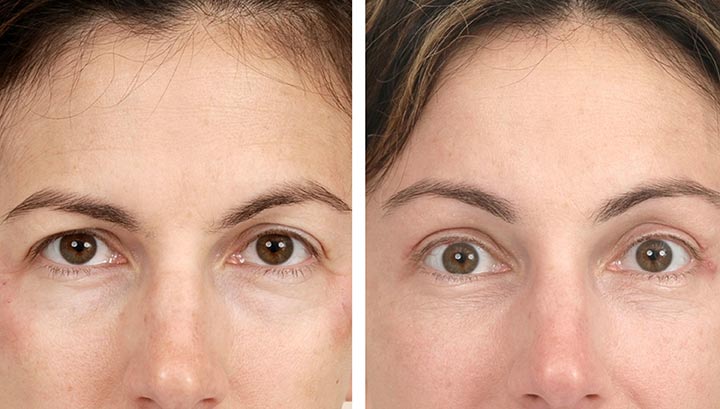
Brow lift surgery aims to carefully reposition areas of the brow that have descended due to aging or individual anatomy.
The entire brow does not need to be lifted in every patient.
In some individuals, the main concern is limited to the outer portion of the brow, while in others the brow and forehead tissues may need to be addressed more comprehensively.
The goal is to create a more balanced relationship between the eyes and eyebrows without changing the patient’s natural facial expression.
Patients who have noticed that their eyebrows have gradually descended and feel that this contributes to upper eyelid heaviness or a tired appearance may be evaluated for brow lift surgery.
Some patients with noticeable descent of the outer brow may be suitable candidates for a temporal lift or lateral brow lift.
Surgical options may also be considered in individuals with naturally low-set eyebrows when their facial anatomy and expectations are appropriate.
Chronological age alone is not a criterion for brow lift surgery.
Not every heavy-looking upper eyelid is caused by brow ptosis.
In some patients, the primary problem is excess upper eyelid skin. In such cases, blepharoplasty may be more appropriate.
In others, the brow position may be normal, but the patient may simply desire a higher or more slanted brow appearance. In these cases, the compatibility of the requested change with the rest of the face should be carefully evaluated.
If brow ptosis is related to facial nerve paralysis, trauma, or another medical condition, a different assessment may be required from that used for aesthetic aging.
During a brow lift consultation with Dr. Atilla Fesli, the evaluation is not limited to how high the brow can be lifted.
The position of the inner, middle, and outer portions of the brow, brow shape, forehead height, hairline, temporal region, excess upper eyelid skin, the eye area, and natural right-left asymmetries are evaluated together.
The position of the eyebrows at rest and the way they move during facial expression are also important.
Previous blepharoplasty, brow lift, facelift, Botox/botulinum toxin, and filler treatments are taken into consideration when planning surgery.
Distinguishing between these two conditions is one of the most important aspects of brow and periorbital surgery.
When the brow descends, the tissues beneath it may also place additional weight on the upper eyelid. This may be mistaken for excess upper eyelid skin alone.
In such cases, removing a large amount of upper eyelid skin alone may not always be the appropriate approach.
On the other hand, a patient with a normal brow position may have genuine excess upper eyelid skin and may not require a brow lift.
For this reason, Dr. Atilla Fesli evaluates the brow and upper eyelid not as separate structures, but as interconnected parts of the same anatomical region.
There is no single brow lift technique that is appropriate for every patient.
Different techniques may be used depending on the degree of brow descent, which portion of the brow requires repositioning, forehead height, hairline, and any previous surgical procedures.
In suitable patients, techniques using limited incisions within the scalp may be considered.
For more extensive forehead and brow descent, endoscopic or other brow lift techniques may be evaluated.
The surgical technique is selected not simply to achieve the smallest possible incision, but to perform the required anatomical correction in a controlled manner.
A temporal lift, or temple lift, is a surgical approach that primarily addresses the outer portion of the eyebrow and the tissues of the temporal region.
It may be considered in selected patients who do not have significant descent of the inner brow but have downward displacement of the outer brow.
The goal is not to pull the outer brow excessively upward, but to create a relationship between the eye and brow that is appropriate for the patient’s overall facial anatomy.
A temporal lift is not the solution for every type of brow ptosis.
An endoscopic brow lift allows the surgeon to work through smaller incisions within the scalp using a camera and surgical instruments.
In suitable patients, this technique may allow the brow and forehead tissues to be repositioned across a broader area.
However, the fact that a technique is endoscopic does not automatically mean that it is better or more appropriate for every patient.
Forehead height, hairline position, the pattern of brow descent, and the required correction determine which technique may be most appropriate.
Not exactly.
Although the two procedures are related, their surgical goals and extent may differ.
In limited brow ptosis, treating only a specific portion of the brow may be sufficient.
When there is more widespread laxity of the forehead tissues together with changes in the overall brow position, a more comprehensive forehead lift/brow lift approach may be required.
The appropriate procedure should therefore be determined according to the patient’s anatomy rather than simply by the name of the operation.
Yes. In suitable patients, the two procedures may be planned together.
However, brow lift surgery and upper eyelid surgery are not alternatives to one another; they address different anatomical problems.
If a low brow position contributes to upper eyelid heaviness, repositioning the brow may be necessary.
If genuine excess upper eyelid skin is also present, blepharoplasty may be added to the surgical plan.
The important point is to assess the true position of the brow before removing more upper eyelid skin than necessary.
Changing the position of the eyebrows may affect how the eye area is perceived.
In particular, elevating the outer portion of the brow may make the eye area appear more open.
However, a brow lift does not directly alter the anatomical shape of the eyeball or eyelid.
In Dr. Atilla Fesli’s approach, the goal is to reduce heaviness around the eyes while preserving the patient’s natural gaze and facial identity.
No.
Brow lift surgery and the pronounced slanted appearance often referred to on social media as “fox eyes” or “cat eyes” do not necessarily share the same objective.
The purpose of a brow lift is to reposition the eyebrow to an anatomically appropriate position.
Excessively elevating the outer brow may create a surprised or unnatural expression in some faces.
For Dr. Atilla Fesli, the goal is not to reproduce a particular trend, but to create a balance that suits the patient’s individual eye and brow anatomy.
Botulinum toxin injections can temporarily modify the activity of specific muscles involved in brow movement and may produce a limited change in brow position in selected patients.
A surgical brow lift, on the other hand, aims to physically reposition the tissues.
The two methods therefore do not provide the same effect or the same duration of change.
Non-surgical treatments may be sufficient for mild and dynamic concerns, while surgical options may be considered when there is more significant tissue descent.
A brow lift is not a scarless operation.
Depending on the technique used, incisions may be positioned within the scalp, along the hairline, or in other anatomical areas.
Incisions within the scalp may be less noticeable from the outside in some patients, but it cannot be guaranteed that no scar will form.
Individual wound healing and hair characteristics also influence scar visibility.
When incisions are made within the scalp, temporary thinning of the hair around the incision may occur.
More prolonged or permanent hair loss is possible, although less common.
For this reason, hairline position and hair density are part of the preoperative assessment.
Patients who have previously undergone hair transplantation or forehead/brow surgery should inform Dr. Atilla Fesli during the consultation.
The type of anesthesia used for brow lift surgery depends on the surgical technique and any additional procedures performed at the same time.
Some limited procedures may be performed under local anesthesia with sedation, while general anesthesia may be preferred for more extensive surgery.
Combining a brow lift with procedures such as blepharoplasty, facelift, or neck lift may also affect anesthesia requirements and surgical duration.
For this reason, there is no single standard operating time that applies to every patient.
Swelling, bruising, tightness, and temporary sensory changes may occur around the forehead, temples, and eyes following brow lift surgery.
In some patients, swelling may extend downward toward the eye area.
Brow height or asymmetry seen during the first few days may not represent the final result. Tissue settling and resolution of swelling take time.
Rather than stating that patients can “return to normal life immediately after surgery,” it is more accurate to explain that recovery varies according to the extent of the procedure performed.
The timing of showering depends on the type of incision, dressings, and surgical technique used.
Rather than routinely stating that every patient can shower on the second day, postoperative wound condition and follow-up findings should guide this decision.
Some patients may return to desk work relatively early, although swelling and bruising may continue to affect social appearance.
Strenuous exercise and activities that place stress on the healing tissues should be resumed more gradually.
The new position of the eyebrows may be noticeable immediately after surgery, but the early appearance does not represent the final result.
Swelling, tissue tension, and the healing process may cause the brow position to change during the first few weeks.
As the tissues settle, the result gradually becomes more natural.
Scar maturation and complete tissue settling may take several months.
A surgical brow lift may provide a long-term change, but it does not stop the aging process.
The skin, connective tissues, and other facial structures continue to change over time.
Genetic characteristics, skin quality, sun damage, and lifestyle may also influence the long-term result.
For this reason, a brow position that remains completely unchanged for life cannot be guaranteed.
Like other surgical procedures, brow lift surgery is not risk-free.
Possible complications include bleeding, hematoma, infection, wound-healing problems, noticeable scarring, and asymmetry between the right and left sides.
Temporary and, rarely, persistent sensory changes may occur, as well as changes in the hairline and hair loss around the incision.
The eyebrows may remain higher or lower than intended, or a noticeable difference in position may develop between the two brows.
Nerve-related functional changes are less common but are also among the potential complications.
The two eyebrows are not naturally expected to be identical in height, shape, or movement.
Natural asymmetry may already be present before surgery.
Surgery may reduce these differences, but millimetric or mathematically perfect symmetry cannot be guaranteed.
Brow position is also influenced not only by static anatomy but by the movement of the muscles of facial expression.
The goal is not to force perfect symmetry, but to create a more balanced appearance within the patient’s overall facial expression.
During postoperative follow-up appointments, the incision sites, swelling, brow position, differences between the two sides, sensory changes, and healing of the scalp are evaluated.
Small differences in brow position during the first few weeks may change as swelling decreases.
Scar and scalp healing may require longer-term follow-up.
Over the long term, it should also be kept in mind that aging continues and that the tissues of the brow and forehead may change again over time.
What is brow lift surgery?
Brow lift surgery is a general term for surgical techniques designed to reposition the entire eyebrow or selected portions of it according to the patient’s anatomy.
Why do eyebrows descend?
Age-related tissue changes, individual anatomy, and, in some cases, medical conditions affecting nerve or muscle function may alter brow position.
Can low eyebrows make me look tired?
A low brow position may contribute to heaviness in the upper eyelid region and may create the impression of a tired or sad expression in some individuals.
Should I have a brow lift or eyelid surgery?
These procedures address different concerns. If the brow position is normal but excess eyelid skin is present, blepharoplasty may be considered. If brow ptosis contributes to upper eyelid heaviness, the brow region may also need to be addressed.
Can a brow lift and blepharoplasty be performed together?
Yes. If both anatomical concerns are present, the procedures may be considered within the same surgical plan in suitable patients.
Are a temporal lift and brow lift the same thing?
A temporal lift is one of the approaches that primarily targets the temple region and outer portion of the brow. Brow lift is a broader term that includes several surgical techniques.
Is an endoscopic brow lift better?
Not for every patient. Endoscopic brow lift is one surgical option. The most appropriate technique depends on forehead height, hairline position, brow anatomy, and the correction required.
Will a brow lift make my eyes look more slanted?
Changing the position of the outer brow may influence the appearance of the eye area. However, the goal of a natural brow lift is not to create a pronounced slanted-eye appearance in every patient.
Is a brow lift the same as “fox eyes”?
No. A brow lift may be performed to correct anatomical brow ptosis, whereas “fox eyes” describes a more specific aesthetic appearance.
Can Botox lift the eyebrows without surgery?
In suitable patients, botulinum toxin may produce a limited and temporary change in brow position. It is not the same procedure and does not produce the same effect as a surgical brow lift.
Will my face look surprised after a brow lift?
Excessive brow elevation may create an unnatural expression. For this reason, the goal is not maximum elevation, but a position that is appropriate for the patient’s existing facial anatomy.
Will there be scars after brow lift surgery?
Yes. Surgical incisions leave scars. Depending on the technique, the incisions may be positioned within the scalp or along natural anatomical boundaries to make them less noticeable.
Can hair loss occur after a brow lift?
Temporary thinning may occur around scalp incisions. Longer-term hair loss is less common but remains possible.
Is a brow lift permanent?
It may provide a long-term change, but because the face continues to age, the result will not remain completely unchanged for life.
Can the eyebrows descend again?
Yes. As aging continues, the brow and forehead tissues may undergo further changes over the years.
Is there a specific age for brow lift surgery?
No. The decision is based more on brow position, tissue characteristics, facial anatomy, general health, and patient expectations than on chronological age alone.
Can brow lift surgery be performed in Antalya or Qatar?
A consultation and surgical planning with Dr. Atilla Fesli can be arranged in Antalya, Türkiye or Doha, Qatar for brow lift, temporal lift, endoscopic brow lift, and periorbital rejuvenation options.
A consultation with Dr. Atilla Fesli can be arranged in Antalya, Türkiye or Doha, Qatar for brow lift, temporal lift, forehead lift, and periorbital rejuvenation procedures.
The consultation is not limited to answering the question, “How many millimeters can my eyebrows be lifted?”
The position of the inner and outer brow, forehead height, hairline, temporal region, excess upper eyelid skin, eye shape, facial movements, and natural facial asymmetries are evaluated together.
This helps determine whether blepharoplasty alone may be sufficient, whether a temporal lift may be appropriate, or whether a more comprehensive brow/forehead lift should be considered.
Even a few millimeters of change in brow position can influence facial expression.
For this reason, the goal is not to lift the eyebrows as high as possible, but to create a position that is harmonious with the eye shape, brow anatomy, and the rest of the face.
In Dr. Atilla Fesli’s approach, the objective is not to create a more pulled or different-looking face, but to achieve a more rested expression while preserving the patient’s natural gaze and facial identity.
Dr. Atilla Fesli
Antalya, Türkiye • Doha, Qatar
Natural. Balanced. Still You.