Liposuction is not a weight-loss procedure. The best results are generally achieved in patients whose weight is relatively stable but who have persistent localized fat deposits and contour irregularities. Technologies such as PAL, ultrasound-assisted liposuction, or VASER are surgical tools; the key factors influencing the outcome are appropriate patient selection, safe fluid management, anatomical planning, and surgical technique. If skin elasticity is poor, removing fat alone may not correct skin laxity. In such cases, skin-removal procedures such as a tummy tuck, arm lift, or thigh lift may need to be considered.
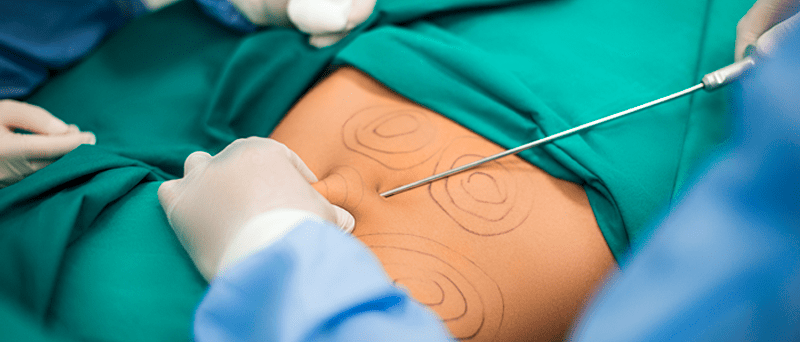
Liposuction aims to reshape body contours by reducing localized fat deposits that remain despite diet and exercise.
It can be performed on different anatomical areas, including the abdomen, waist, back, hips, thighs, knees, arms, and under the chin.
Some patients may require treatment of a single area, while others may benefit from contouring several areas together.
The primary goal is not weight loss, but to improve body proportions and create a more balanced silhouette.
Liposuction is generally considered for patients whose weight is relatively stable but who have persistent localized fat deposits in specific areas.
Good skin elasticity may be advantageous because it can help the skin adapt to the new contour after fat reduction.
The patient’s general health should also be suitable for elective surgery and anesthesia.
Having realistic expectations about what liposuction can and cannot achieve is one of the most important aspects of appropriate patient selection.
Liposuction is not a substitute for obesity treatment or a general weight-loss program.
For some patients with significant excess weight, achieving better weight control and reaching a relatively stable weight before surgery may be recommended.
In patients with significant skin laxity, removing fat alone may not provide the expected tightening and, in some cases, may make loose skin appear more noticeable.
Patients with medical conditions that increase surgical risk, a high risk of blood clots, or conditions that may negatively affect healing require additional assessment before surgery.
A liposuction consultation is not limited to the question, “Where should fat be removed?”
Fat distribution, skin quality and elasticity, muscle structure, existing asymmetries, previous surgeries, and overall body proportions are evaluated together.
Particularly in the abdominal area, not all protrusion is necessarily caused by subcutaneous fat. Loose skin, separation of the abdominal muscles, or visceral fat inside the abdominal cavity may also influence the appearance.
This distinction is important because liposuction can only contour accessible fat tissue. It is not the solution for every type of abdominal protrusion.
Liposuction can be performed using different technologies.
PAL (Power-Assisted Liposuction), ultrasound-assisted systems, and VASER may be incorporated into the surgical plan in suitable patients.
However, the device used does not determine a good result on its own.
In Dr. Atilla Fesli’s approach, the choice of technology is based on the treatment area, characteristics of the fat tissue, skin quality, and the desired contour.
The fundamental objective is not to remove as much fat as possible, but to reduce fat in selected anatomical areas in a controlled manner to create a more balanced body contour.
For some patients, the concern is not limited to the abdomen or waist alone.
Evaluating and treating the abdomen, waist, flanks, and back together can allow circumferential contouring of the torso. This approach is commonly referred to as 360° liposuction.
However, 360° liposuction is not a standardized package that should be performed on every patient.
The areas included in treatment are determined according to the patient’s anatomy, the extent of surgery that can be performed safely, and the desired body proportions.
The primary function of liposuction is to reduce fat tissue.
In patients with good skin elasticity, the skin may adapt to the new body contour to some degree. However, removing significant excess skin is not the primary function of liposuction.
When substantial skin laxity is present following pregnancy, major weight loss, or aging, skin-removal procedures such as a tummy tuck, arm lift, or thigh lift may need to be considered.
For this reason, preoperative planning should evaluate not only the amount of fat but also how the skin is likely to respond after liposuction.
The type of anesthesia is determined according to the number of areas being treated, the extent of surgery, and the patient’s individual characteristics.
More extensive body contouring procedures are generally performed under general anesthesia in an appropriately equipped operating room.
When liposuction is planned over larger areas, factors such as total treatment volume, fluid balance, blood loss, maintenance of body temperature, and the risk of blood clots become particularly important for surgical safety.
Swelling, bruising, tenderness, and temporary firmness may occur following liposuction.
The body contour seen during the early postoperative period does not represent the final result. As swelling gradually decreases, the shape of the treated areas becomes more apparent.
Some patients may be advised to wear a compression garment for a period of time after surgery.
The timing of return to daily activities, work, and exercise depends on the extent of the procedure.
Because the final contour may take several months to settle, irregularities seen during the early stages of recovery should not automatically be considered permanent.
Liposuction is not completely scarless.
Small incisions are required to allow insertion of the liposuction cannulas. Whenever possible, these are positioned within natural folds or less visible areas.
The appearance of these scars over time depends on the individual’s healing characteristics.
Numbness, altered sensitivity, or unusual sensations may occur in the treated areas after surgery. Many of these changes improve over time, although persistent sensory changes are also possible.
Like any surgical procedure, liposuction is not risk-free.
Possible complications include bleeding, infection, fluid accumulation, prolonged swelling, changes in sensation, asymmetry, skin irregularities, waviness, or unwanted contour changes.
With more extensive procedures, fluid and electrolyte balance, blood loss, and anesthesia-related risks become increasingly important.
Blood clot-related complications such as deep vein thrombosis (DVT) and pulmonary embolism (PE) are uncommon but potentially serious risks. Rare but serious complications such as fat embolism and internal organ injury are also possible.
For this reason, particularly with larger-volume liposuction procedures, safety limits are more important than the maximum amount of fat that can be removed.
The human body is naturally not perfectly symmetrical.
Differences may exist between the two sides of the waist, hips, abdomen, or thighs before surgery.
Liposuction may reduce some of these differences, but mathematically perfect symmetry or a completely smooth skin surface cannot be guaranteed.
In addition, cellulite, stretch marks, and significant skin laxity are not the primary conditions treated by liposuction.
The goal of surgery is to improve body contour within realistic anatomical limits.
Liposuction reduces the number of fat cells in the treated areas, but this does not mean that the patient can no longer gain weight.
Remaining fat cells can enlarge with weight gain, and fat accumulation may also occur in other areas of the body.
Maintaining a relatively stable weight after surgery is therefore important for preserving the long-term body contour.
Pregnancy, significant weight fluctuations, and natural aging may also affect the result over time.
During postoperative follow-up appointments, swelling, incision sites, skin and soft tissues, and overall healing are evaluated.
The use of compression garments, physical activity, and return to exercise are adjusted according to the progress of recovery.
Because swelling and contour changes are common during the first few weeks, sufficient time should be allowed before assessing the final result.
In the long term, maintaining a stable weight and allowing the tissues to adapt to the new contour are important for preserving the result.
How much weight can I lose with liposuction?
Liposuction is not a weight-loss method, and its success is not measured by the number of kilograms removed. The objective is to improve body proportions by reducing fat tissue in selected areas.
How much fat can be removed?
There is no single safe volume that applies to every patient. The extent of surgery depends on factors such as the patient’s health, body structure, areas being treated, anesthesia, and surgical setting. Safety always takes priority over the amount of fat removed.
Is VASER better than traditional liposuction?
VASER is a technology that may offer advantages in selected patients, but it does not guarantee a better result on its own. Patient selection, surgical planning, and technique remain the primary factors influencing the outcome.
Can the skin sag after liposuction?
If skin elasticity is poor, reducing fat volume may make existing laxity more noticeable. This is why skin quality should be evaluated before surgery.
Does liposuction remove cellulite?
Liposuction is not a treatment for cellulite. Skin appearance may change in some patients, but complete elimination of cellulite should not be expected.
Does liposuction remove stretch marks?
No. Liposuction targets fat beneath the skin and does not directly treat stretch marks on the skin.
Can all abdominal fat be removed with liposuction?
No. Liposuction targets accessible subcutaneous fat beneath the skin. Visceral fat, which surrounds the internal organs inside the abdominal cavity, cannot be removed with liposuction.
Does fat move to another area after liposuction?
Fat does not physically move from the treated area to another part of the body. However, if weight is gained after surgery, remaining fat cells can enlarge and fat accumulation may become noticeable in different areas.
What is the difference between liposuction and a tummy tuck?
Liposuction primarily reduces fat tissue. A tummy tuck removes excess skin and may also include procedures addressing the abdominal wall when necessary. In selected patients, the two procedures may be combined.
Can men have liposuction?
Yes. Liposuction can be performed in men on areas such as the abdomen, waist, chest, and under the chin. However, the desired anatomical contours in male body shaping may differ, so surgical planning should reflect these differences.
Patients considering liposuction and body contouring can arrange a consultation with Dr. Atilla Fesli in Antalya or Doha.
The consultation is not limited to answering the question, “How many litres of fat can be removed?”
Fat distribution, skin elasticity, body proportions, existing asymmetries, and the patient’s desired appearance are evaluated together to determine whether liposuction alone may be sufficient, which areas may benefit from contouring, and whether an additional skin-removal procedure may be required.
The goal of liposuction is not to remove as much fat as possible.
The objective is to create a more balanced body contour by treating the appropriate areas within safe surgical limits while respecting the patient’s individual anatomy.
Dr. Atilla Fesli
Natural. Balanced. Still You.